
Built for the Ring? AMD's Complete Halo Gaming Platform

After covering the launch of Halo: Campaign Evolved last month, we wanted to answer a simple question: what hardware delivers the definitive Halo experience?
To find out, we teamed up with tech reviewer CtrlAltAlex to put AMD’s latest gaming hardware through its paces. Using a single AMD Ryzen™ 7 9850X3D as the foundation, we tested two Radeon™ graphics cards, the AMD Radeon™ RX 9070 GRE for our 1440p testing and the AMD Radeon™ RX 9070 XT for 4K.
With the CPU remaining constant and the GPU being the only major component changed between the two test systems, the aim was straightforward: discover how each Radeon card handles Halo: Campaign Evolved and determine which combination makes the most sense depending on the resolution you want to play at.

Armed with Ultra settings, AMD FSR 4 and Frame Generation, we headed back to the ring to see how far the hardware could be pushed.
From huge open environments and atmospheric landscapes to explosive firefights packed with visual effects, Halo: Campaign Evolved provides plenty of opportunities to put modern gaming hardware under pressure. Across our testing, we were particularly interested not just in headline frame rates, but in how consistently each configuration performed when the action intensified.
And one thing quickly became clear: the Ryzen™ 7 9850X3D was never the limiting factor.
Across the hardware-overlay scene captures, GPU utilization remained at 100%, while CPU utilization stayed between 17% and 34%. That left substantial processing headroom for the Radeon GPUs to handle the graphical workload.
In other words, the CPU did exactly what you want from a high-end gaming processor, it got out of the way and allowed the graphics hardware to shine.
1440p Sweet Spot: Radeon™ RX 9070 GRE
For gamers targeting 1440p, the Radeon™ RX 9070 GRE proved to be an excellent fit.
At Ultra settings, the RX 9070 GRE delivered an average of 60.4 FPS natively.
Once AMD FSR 4 High was enabled, that figure climbed dramatically to 98.2 FPS, while the 1% low remained at an impressive 79.9 FPS.
That is a substantial improvement and demonstrates exactly where technologies such as FSR 4 can make a difference.

Rather than simply chasing a larger average number, the GRE produced a strong balance between performance and consistency. Exploration across the ring remained fluid, while firefights and visually demanding sequences maintained a solid level of performance.
For a 1440p gaming setup, that makes the RX 9070 GRE a particularly compelling option, especially when paired with the Ryzen 7 9850X3D and FSR 4.
The result is a configuration that delivers high-refresh-rate potential without needing to step up to the considerably more powerful RX 9070 XT.

4K Performance: Radeon™ RX 9070 XT
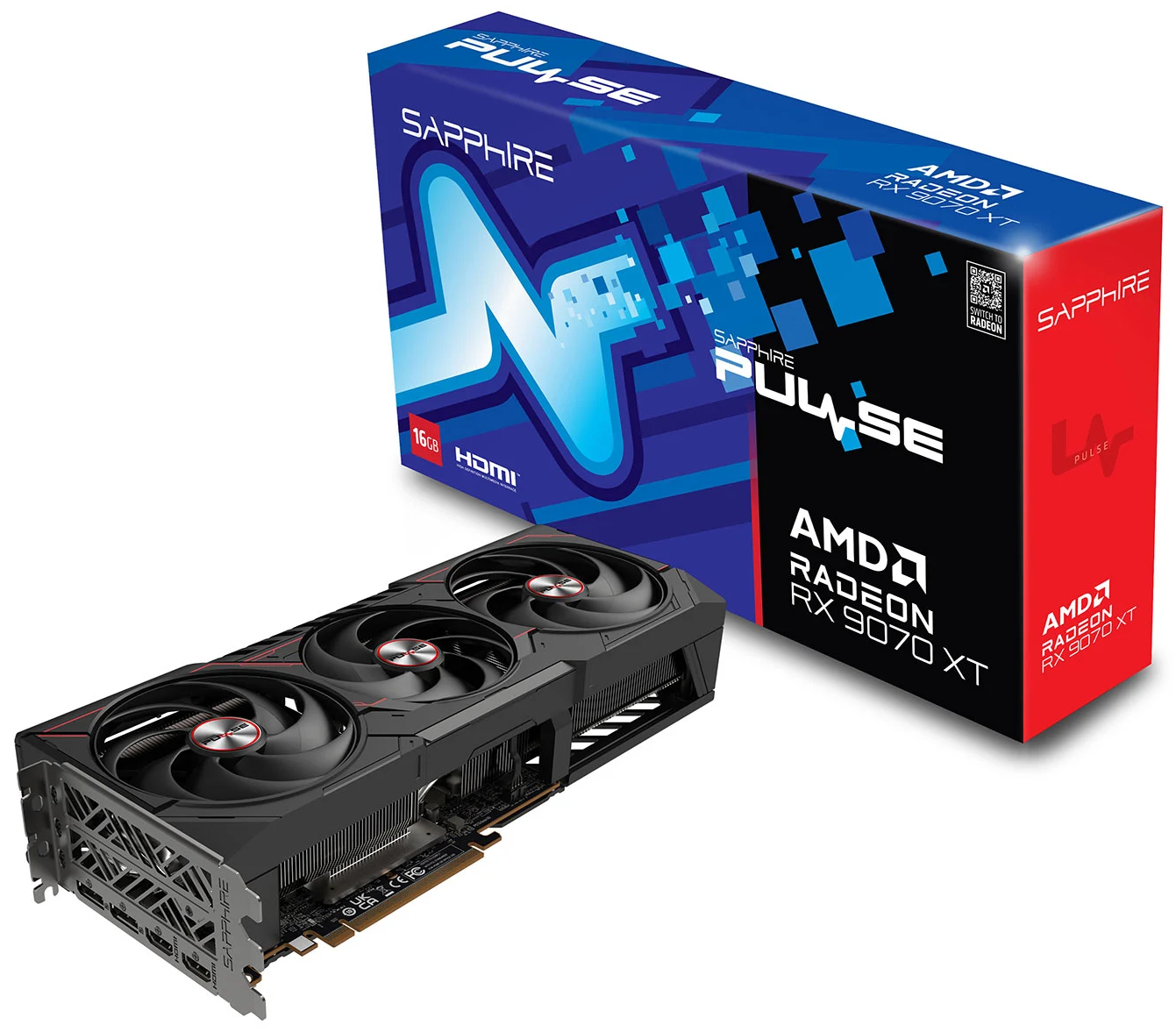
If 4K is your target, however, the Radeon™ RX 9070 XT takes things to another level.
At native 4K Ultra, the RX 9070 XT averaged 49.3 FPS, with a 38.9 FPS 1% low.
That demonstrates just how demanding Halo: Campaign Evolved can become when rendering at the full 4K resolution with maximum visual settings.
Enable FSR 4 High and Frame Generation, however, and the picture changes dramatically.

Performance surged to an impressive 133.8 FPS, while the 1% low remained above 109 FPS, reaching 109.6 FPS in testing.
That combination provides an exceptionally smooth experience and demonstrates just how much additional performance can be extracted from the RX 9070 XT when AMD’s upscaling and frame-generation technologies are brought into play.

The difference between the two GPUs also became increasingly apparent as the workload became more demanding.
Across the benchmark configurations that were directly comparable between the two graphics cards, the RX 9070 XT delivered an average performance advantage of approximately 34%. Its advantage increased from around 27% at 1440p to almost 40% at 4K with Frame Generation enabled.
Simply put, the more demanding the workload became, the further the RX 9070 XT pulled ahead.
The Impact of Frame Generation
One of the most interesting aspects of the testing was the impact of Frame Generation.
At 4K Ultra with FSR 4 High enabled, Frame Generation increased performance by approximately 67% on the RX 9070 GRE and 73% on the RX 9070 XT.
Those are significant gains.
Just as importantly, the increased frame rates were accompanied by strong 1% low results, helping maintain a smooth experience when moving through demanding environments and during heavier combat sequences.

For players who want to maximize both visual quality and frame rate, FSR 4 and Frame Generation provide powerful tools for getting more from the hardware.
It is worth noting that our testing focused on performance and frame consistency rather than latency, so these results should be viewed primarily as a demonstration of the substantial frame-rate and smoothness benefits Frame Generation can provide.
The Real Star: Ryzen™ 7 9850X3D
While the graphics cards naturally take centre stage in a GPU comparison, perhaps one of the most important findings from the testing was what didn't happen.
The AMD Ryzen™ 7 9850X3D never became a limiting factor.

Whether the system was targeting close to 100 FPS at 1440p or pushing beyond 130 FPS at 4K with FSR 4 and Frame Generation, the processor provided the headroom required for the Radeon graphics cards to operate at their full potential.
With CPU utilisation remaining between 17% and 34% across our hardware-overlay scene captures while GPU utilisation reached 100%, the results demonstrate that the Ryzen 7 9850X3D had considerable headroom available.
That makes the CPU an important part of the overall platform.
We're not claiming the Ryzen 7 9850X3D is faster than another processor based on this testing, only one CPU was used throughout. What the results do show is that, when paired with either of these Radeon GPUs, the processor was more than capable of keeping up with the demands of Halo: Campaign Evolved.
And that's exactly what you want from a gaming CPU: not a bottleneck, but an enabler.

So, What Would We Recommend?
For players targeting 1440p, the Radeon™ RX 9070 GRE paired with the Ryzen™ 7 9850X3D hits an excellent sweet spot.
With native performance reaching 60.4 FPS and FSR 4 High pushing the average to 98.2 FPS with a 79.9 FPS 1% low, it offers an impressive combination of image quality, performance and consistency.

For those wanting to step into 4K, however, the Radeon™ RX 9070 XT is the clear choice.
Its additional horsepower becomes increasingly valuable as the resolution and workload increase, and with FSR 4 High and Frame Generation enabled, our test system reached 133.8 FPS, with 1% lows remaining above 109 FPS.
That makes the RX 9070 XT the stronger option for anyone looking to push Halo: Campaign Evolved beyond 100 FPS at 4K.
Tying both experiences together is the AMD Ryzen™ 7 9850X3D.
Using the same processor across both GPU configurations allowed us to see exactly how the two Radeon cards performed without changing the CPU variable. Throughout our testing, the processor provided the headroom required for both GPUs to perform at their best.

One CPU. Two GPUs. Two Very Different Halo Experiences.
After putting the two configurations through their paces with CtrlAltAlex, one conclusion stood above the rest: there isn't one single Radeon configuration that is right for every Halo player.
Instead, the choice comes down to the resolution and performance target you're aiming for.
The RX 9070 GRE makes a compelling case for 1440p, delivering strong performance while making excellent use of FSR 4.
The RX 9070 XT, meanwhile, demonstrates its strengths when the workload gets heavier, particularly at 4K where its additional horsepower allows it to pull significantly ahead.
At the heart of both configurations sits the Ryzen™ 7 9850X3D, providing the processing headroom needed to ensure neither Radeon GPU was held back during our testing.

The result is a powerful AMD gaming platform that gives players two distinct routes into Halo: Campaign Evolved, one optimised around an excellent 1440p experience and another designed to push towards an exceptionally smooth 4K experience.
Whether you're returning to the ring for another campaign run, hunting down hidden objectives or simply taking in the scale of Installation 04, the right combination of Ryzen and Radeon hardware can make the experience even more impressive.
Ready to Build Your Own Halo Loadout?
Our testing showed that combining the AMD Ryzen™ 7 9850X3D with the Radeon™ RX 9070 XT delivers a phenomenal Halo: Campaign Evolved experience, pairing the visual quality of 4K Ultra with the performance benefits of FSR 4 and Frame Generation.
But the RX 9070 XT isn't the only route.
Scan Computers has dedicated Halo: Campaign Evolved hardware recommendations covering enthusiast-class AM5 systems, value-focused AM5 builds and upgrade-friendly AM4 configurations, making it easier to find an AMD Ryzen and Radeon combination that suits both your performance requirements and budget.
Whether you're planning your next upgrade or building an entirely new gaming PC, Scan's recommendations provide a useful starting point for putting together your own Halo-ready battle
station.
Explore Scan's Halo: Campaign Evolved build guide and discover the latest AMD Ryzen™ and Radeon™ hardware today.


